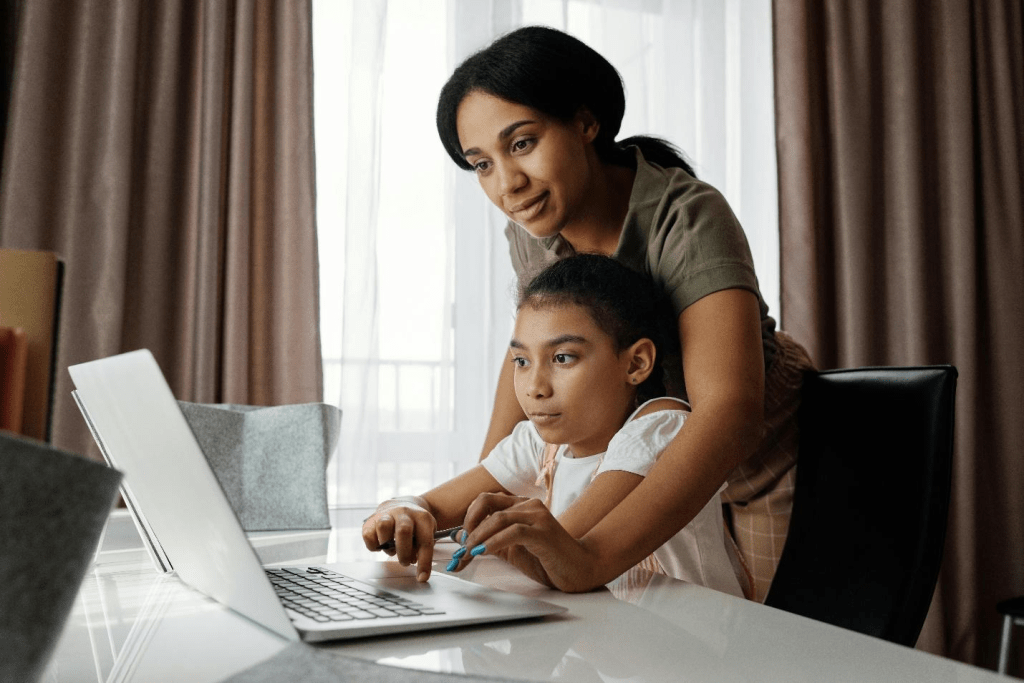
Hi everyone! I’m Kaanchi Utpat, and today, I want to share a story about how self-education changed the way I view the world and myself. Growing up, my sister Nishka and I have always been close. She’s in her first year of college studying Pre-Med, while I’m still in high school, focusing on Biotechnology. Despite the difference in our grades, one thing that bonds us deeply is our shared passion for empowering young girls and women through education—especially when it comes to issues like menstruation, which is often misunderstood or stigmatized.
Let me take you back to when Nishka and I first learned about menstruation. I was in the 4th grade, and Nishka was right there with me in our school in the U.S. when they introduced the concept. To be honest, we didn’t fully grasp what it meant back then. It was just something that was going to happen to us at some point, and we thought, “Well, okay, that’s part of growing up, I guess.” We went home and told our mom about it, expecting her to fill in the gaps.
That conversation with our mom was eye-opening. It was the first time we realized how different our experiences were from hers when she grew up in India. The way periods were viewed, talked about, and managed in her childhood was nothing like what we were learning in school.
Our mom told us how, in many parts of India, menstruation wasn’t something openly discussed, and there were a lot of taboos attached to it. Girls were often told to stay away from kitchens or temples during their periods as if they were unclean. Some weren’t even allowed to go to school during that time! I was shocked. How could something so natural be treated as something shameful?
A New Perspective on Privilege
Nishka and I suddenly realized how lucky we were to learn about our bodies in an open, honest environment. In the U.S., talking about periods felt normal, at least in comparison.
Yes, there were still awkward moments, like hiding a pad in your sleeve when going to the bathroom, but nothing like the isolation girls face in countries like India, Pakistan, or parts of Africa and Latin America. We were learning about our bodies from teachers and doctors, while girls in other parts of the world didn’t have access to the same education or resources.
Once we realized how different things could be, we wanted to learn more, not just about our own experiences but also about how we could help other girls who weren’t as fortunate. It was through self-education—reading books, articles, and documentaries—that we started to understand the global issues surrounding menstruation and women’s health.
Why Self-Education Matters
Self-education became a powerful tool for me. Here’s why: schools can only teach us so much. There are subjects we’re exposed to in school, like menstruation, but how deeply do we really dive into them? Schools give us a foundation, but the real understanding and passion come when we seek knowledge independently.
For example, I remember watching a documentary about menstrual health in rural India. Girls my age were using rags or leaves during their periods because they didn’t have access to sanitary pads. Many of them would skip school during their period, sometimes dropping out altogether. It was heartbreaking to see.
I couldn’t imagine missing out on school because of something as natural as menstruation. This wasn’t just a health issue; it was a social, educational, and human rights issue. It lit a fire in me to learn more to figure out ways we could help.
Our Mission with the Utpat Foundation
This is why my sister and I started getting involved with the Utpat Foundation, and we’ve never looked back since. We both felt so strongly that no girl should be held back because of something as normal as her period. Through the foundation, we advocate for menstrual health awareness, not just in the U.S., but globally. We work on educating young girls about their bodies, their health, and their rights.
We also realized that education doesn’t just stop at learning facts—it’s about changing attitudes and breaking down social barriers. Through our workshops and social media campaigns, we aim to normalize conversations around periods and advocate for inclusive school policies that ensure access to menstrual products and proper facilities.
For example, one of our recent campaigns focused on “Menstrual Hygiene Day,” where we partnered with schools to distribute hygiene kits and offer educational sessions on menstruation. We saw such a positive response from both students and teachers. It made me feel hopeful for the future because education is key to breaking down stigmas. The more we talk about these issues, the less power the stigma has over us.
Addressing Global Challenges
One of the things I’ve learned is that while we’ve made progress here in the U.S., there’s still so much work to be done worldwide. In countries like India, Latin America, and many parts of Africa, girls still face serious challenges. They lack access to sanitary products, clean water, and even privacy to manage their periods.
Some girls are forced to miss school, which affects their education and future opportunities. When you don’t have the resources to manage your period safely, it becomes a barrier to achieving your goals.
Nishka and I often talk about how we can use our privilege—yes, privilege—to help others. We know that self-education has empowered us to understand our own bodies and overcome social challenges, but not every girl has that same access. That’s where the Utpat Foundation comes in. We’re committed to making a difference by spreading awareness and helping girls worldwide access the education and resources they deserve.
The Power of Knowledge
So, why is self-education so important? Because it gives us the tools to fight against the ignorance and stigma that hold so many girls back. It’s through learning, questioning, and sharing knowledge that we can break down the barriers society places on us. And trust me, there will always be barriers—but the more you know, the easier it becomes to jump over them.
One thing I’ve learned on this journey is that knowledge is power, but sharing that knowledge? That’s what makes it transformative (okay, I’m not supposed to use that word—let’s say “game-changing”). It’s one thing to educate yourself, but it’s a whole other level when you take that knowledge and use it to help others.
Join Us in Making a Change
That’s why I’m inviting you to join us in this mission. Let’s create a world where young girls aren’t held back by social stigmas and where they can embrace their bodies and health with pride and confidence. The Utpat Foundation is more than just a nonprofit; it’s a movement. A movement to ensure that no girl feels ashamed or embarrassed about something as natural as her period.
If you’re passionate about making a difference, visit our website or follow my blogs to find ways to get involved. Whether you participate in a workshop, donate to support menstrual hygiene kits, or simply share our message on social media, every action counts.
Together, we can empower young girls around the world to overcome the social challenges they face, starting with education. Let’s ensure no one has to sit out of life because of something that’s just a natural part.


Leave a Reply